
DashcamCraft Practical Guide
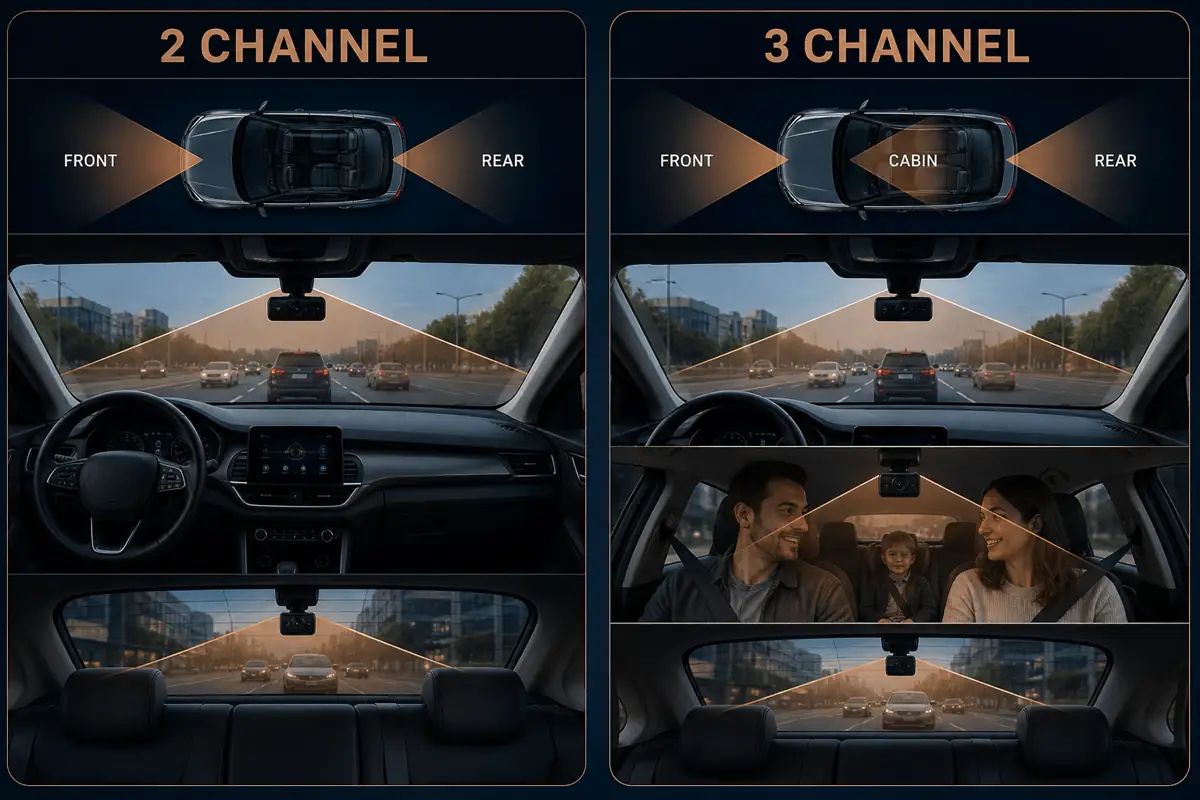
A two-channel system records front and rear. A three-channel system adds the cabin, making it valuable for rideshare, taxi, family, delivery and fleet vehicles, but it increases cost, storage use and installation complexity.
Quick answer
A two-channel system records front and rear. A three-channel system adds the cabin, making it valuable for rideshare, taxi, family, delivery and fleet vehicles, but it increases cost, storage use and installation complexity.
Coverage comparison
Two channels protect the road ahead and traffic behind. Three channels add passenger, side-window and cabin context depending on lens position and field of view.
Who benefits from cabin recording
Rideshare drivers, taxis, instructors, caregivers, delivery drivers and fleet operators may benefit from cabin evidence. Consider notice, consent, audio and privacy requirements.
Storage and power impact
An additional stream reduces retention time and raises power draw. Choose a larger endurance card and review parking-mode expectations.
Installation considerations
Camera placement should preserve sightlines, capture useful angles and avoid obstructing safety sensors or mirrors.
Related DashcamCraft resources
Explore our dash cam resources, professional installation service, calculators and tools, and real installation gallery.