
DashcamCraft Practical Guide
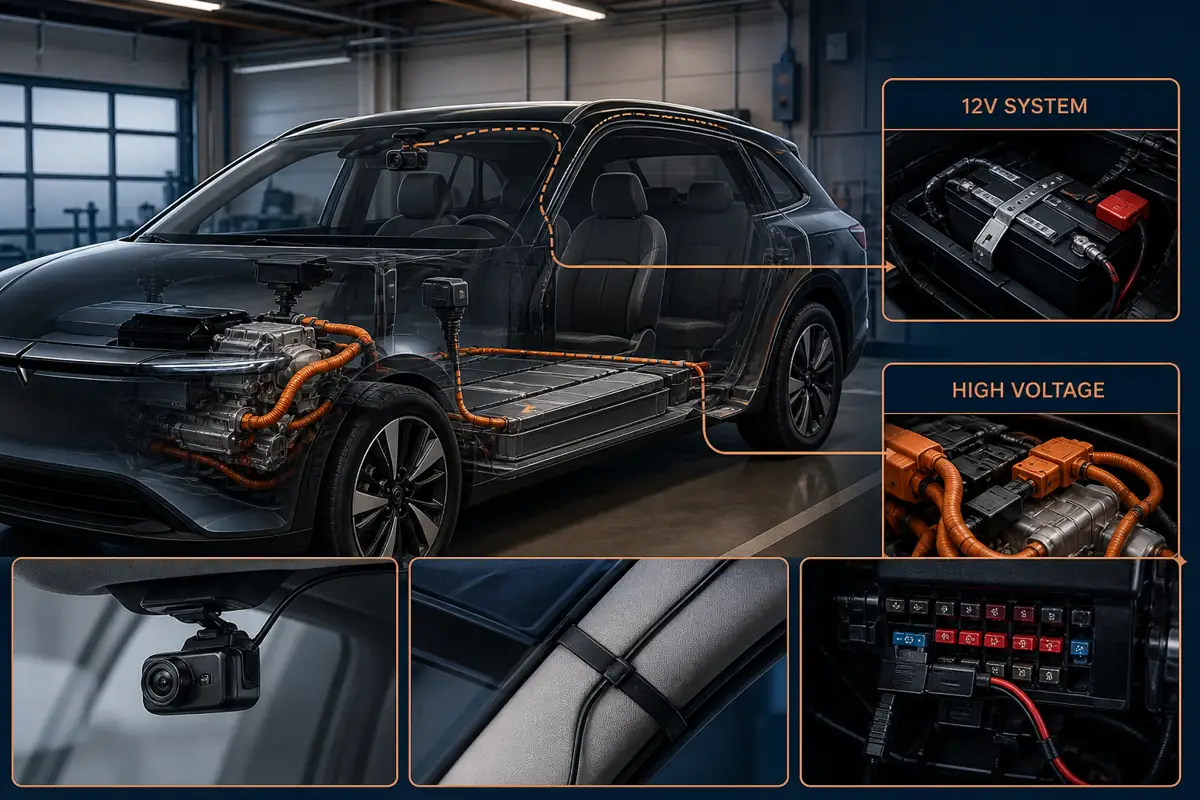
Dash cams in EVs and hybrids normally use the vehicle’s low-voltage accessory system, not the high-voltage traction battery. Installation requires vehicle-specific circuit research, conservative parking-mode settings and avoidance of high-voltage components.
Quick answer
Dash cams in EVs and hybrids normally use the vehicle’s low-voltage accessory system, not the high-voltage traction battery. Installation requires vehicle-specific circuit research, conservative parking-mode settings and avoidance of high-voltage components.
Two electrical systems
The traction system propels the vehicle; the 12-volt or low-voltage system powers accessories and control electronics. Orange high-voltage cabling and components must not be disturbed.
Why vehicle-specific planning matters
Sleep states, electronically controlled fuses, battery-management behavior and sensitive trim vary widely. Generic wiring assumptions can trigger faults or unexpected battery drain.
Parking mode choices
A dedicated dash cam battery may be preferable for longer coverage. Any hardwire solution should use compatible hardware and an appropriate cutoff strategy.
Before the appointment
Provide exact year, make, model and trim, camera model, channel count, desired parking duration and any manufacturer accessory guidance.
Related DashcamCraft resources
Explore our dash cam resources, professional installation service, calculators and tools, and real installation gallery.